

 English
  русский
 Español
 Português
 عربى
عربى
Choosing a cast-iron Dutch Oven is an exciting decision, but selecting the right size can feel challenging. With various capacities available, how do you determine which one suits your household and cooking style? By considering capacity factors, we help you find cookware that's perfect for your kitchen, avoiding the frustration of having pots that are too small to meet your family's needs or too large and inconvenient for everyday use.
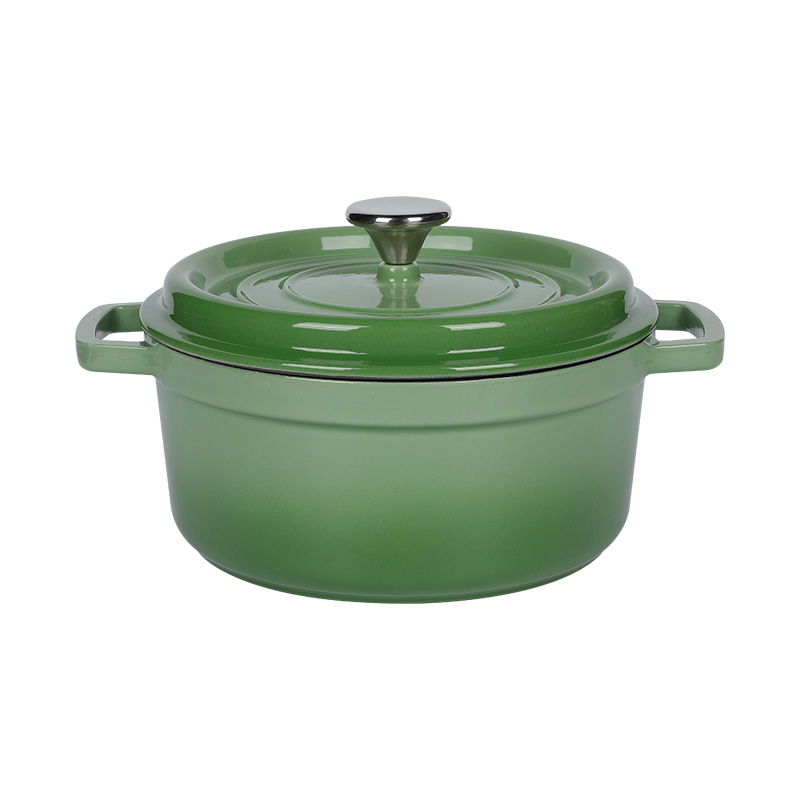
Understanding Capacity Measurements
Cast-iron Dutch Ovens are typically measured in quarts, a standard volume unit in cooking. It can be helpful to visualize what these measurements mean in practice. For instance, a common size holds about four to five quarts, which is generally suitable for preparing a main dish for a few people. Smaller pots, around two to three quarts, are better suited for side dishes, grains, or meals for one. Larger options, holding six quarts or more, are designed for cooking in bigger quantities, perhaps for gatherings or meal prepping.
Matching Size to Household and Purpose
The number of people you regularly cook for is the most straightforward starting point. For individuals or couples, a smaller pot, perhaps two to three quarts, can be a good fit. It is easier to handle and is perfect for preparing soups, oatmeal, or a small batch of beans.
For a household of three or four members, a pot in the four to five-quart range is often considered a versatile choice. This size can accommodate a whole chicken for braising, a generous amount of soup or stew, or a sizeable batch of pasta sauce. Its capacity is sufficient for family meals while still being manageable to lift and store.
If you frequently host dinners or have a larger family, a cast-iron Dutch Oven with a capacity of six quarts or more becomes valuable. It allows you to prepare substantial recipes, such as a large pot of chili, a big batch of stock, or a sizeable roast with vegetables, ensuring there is enough for everyone with potential leftovers.
Your cooking interests also play a role. If baking bread is a primary goal, a round pot with a capacity of about four to five quarts is frequently recommended by baking enthusiasts. Its dimensions create a good environment for a loaf to rise and form a nice crust. If you often cook longer items like a baguette or a whole fish, an oval-shaped pot might be a consideration.
Practical Factors: Weight and Storage
It is important to remember that a cast-iron Dutch Oven is inherently heavy. When you add several quarts of food and liquid, the total weight increases significantly. Consider your comfort with lifting a full pot. A larger capacity model, while useful for big meals, will be considerably heavier and may require two hands to move safely.
Storage space is another practical aspect. These pots require a fair amount of cupboard or shelf space. Measuring your available storage area before purchasing can prevent surprises. Some cooks prefer to store them on the stovetop or on an open shelf where they can also serve as kitchen decor.
For many, starting with a single, medium-sized Cast Iron Dutch Oven provides the most flexibility. A pot around four to five quarts can handle a broad spectrum of everyday cooking tasks. As you discover how you use it, you might later decide to add a very small one for quick tasks or a very large one for special occasions. By thinking about who you cook for, what you enjoy making, and the practicalities of your kitchen, you can select a size that will serve you well for a long time.